Batters
The desk's working file on every named top-order and middle-order batter in the active squads. Each card carries role, form arrow, last-five table and the desk's working read.

A. Renjith
Top-order, right-hand, fielding cover
Two fifties in the last three innings, comfortable against pace on a slow track. Vice-captain weight depends on the toss.

P. Arora
Middle-order, left-hand, finishing role
Finishing role, three not-outs in the last five, and the desk's working read is that the role is amplified on a chase-led toss with a short target.

M. Khan
Top-order, left-hand, opening role
Three single-figure scores in the last five; the role is intact but the form is a soft watch until the next three innings.
All-rounders
The desk's working file on every named all-rounder in the active squads. The all-rounder dossier is the most cycle-sensitive: a four-over bowling spell and a 15-ball batting cameo swing the form arrow in either direction inside a single week.
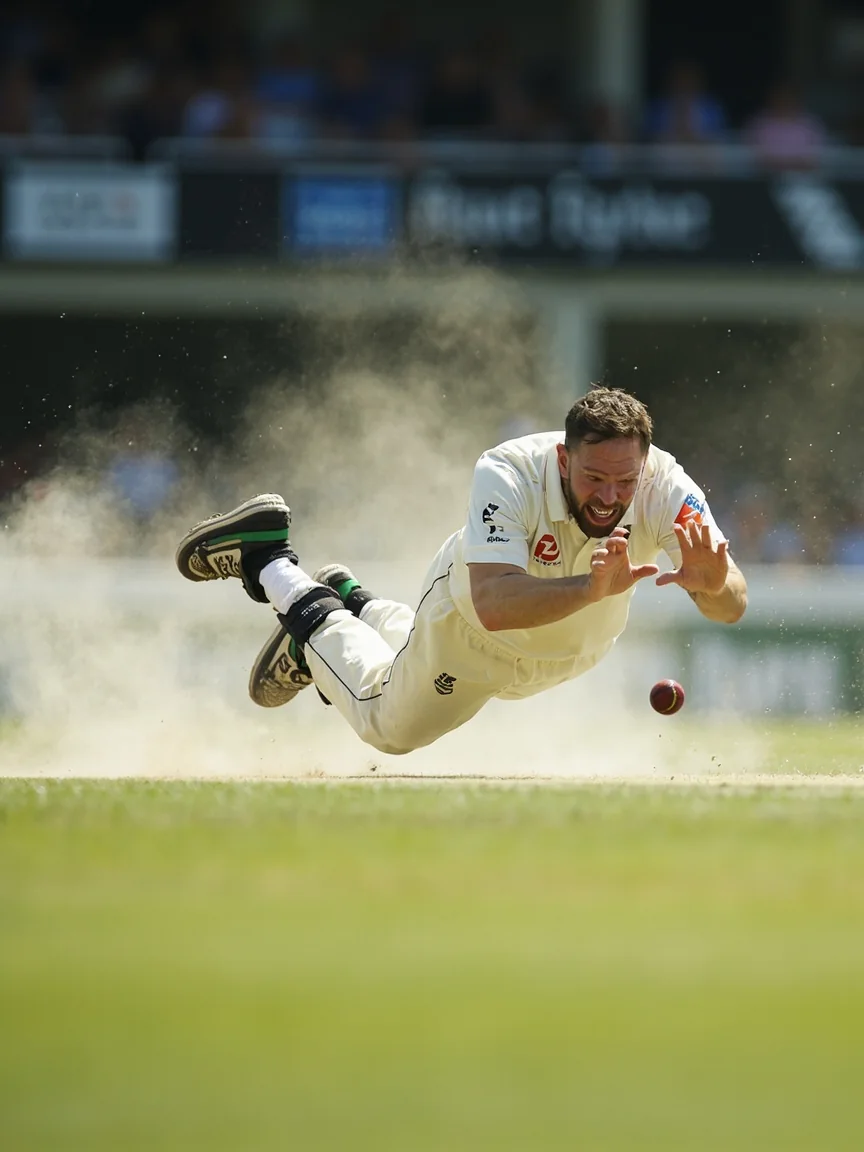
V. Saigal
All-rounder, off-spin, middle-order bat
Wickets in clusters on slow tracks. The captain's read on Saigal: bowl him through the middle, save him for the death only if the surface slows further.

N. Desai
All-rounder, seam, top-order bat
Reliable across both disciplines. The differential slot sits with Desai on a track where the seamers can grip in the powerplay.
Bowlers
The desk's working file on every named bowler in the active squads. The bowler dossier is format-sensitive: a T20 four-over spell sits next to a Test new-ball spell in the same role description but produces different captain-weight logic.
Fast bowlers
The fast-bowler file is built around the new-ball pair and the death-overs specialist. The captain weight sits with the new-ball pair on a green track; the differential slot sits with the death-overs specialist on a flat track where the yorker execution is the differentiator.
Spinners
The spinner file is built around the powerplay spinner, the middle-overs specialist and the death-overs specialist. The captain weight sits with the middle-overs specialist on a slow turner; the differential slot sits with the powerplay spinner on a track where the ball grips from over six.
Wicketkeepers
The desk's working file on every named wicketkeeper in the active squads. The keeper dossier is the most role-specific: the keeper's primary points path is the dismissal, not the batting cameo. The captain weight is rare on a keeper; the differential slot is more common on a track where the keeper's glove work is the differentiator.
Form index
The form index is the desk's working file on the players who have moved in either direction over the last five match days. The index is updated at the end of every game day.
Moving up
- A. Renjith, top-order · three fifties in the last four innings
- V. Saigal, off-spin all-rounder · wickets in clusters on slow tracks
- P. Arora, middle-order · three not-outs in the last five
- N. Desai, seam all-rounder · reliable across both disciplines
Moving down
- M. Khan, top-order · three single-figure scores in the last five
- H. Iyer, fast bowler · expensive on flat tracks
- K. Bose, middle-order · one boundary in the last four innings
Role read
The role read is the desk's standing file on how each role is read across formats. The file is updated at the end of every cycle and is the source of the captain-weight logic in the predictions section.
- Top-order batter. Captain weight on flat tracks; differential on slow turners where the chase is short.
- Middle-order batter. Captain weight in a chase-led toss on a slow track; differential on a flat track where the death-overs batting points are open.
- All-rounder, off-spin. Captain weight on a slow turner; differential on a flat track where the bowling points are open.
- All-rounder, seam. Captain weight on a green track; differential on a flat track where the seamers can grip in the powerplay.
- Fast bowler, new ball. Captain weight on a green track; differential on a flat track where the seamers can swing in the first six.
- Spinner, middle overs. Captain weight on a slow turner; differential on a flat track where the ball grips from over thirteen.
- Wicketkeeper. Differential slot on a track where the glove work is the differentiator; captain weight is rare.
How the desk reads a player
Reading a player on the desk is a four-pass exercise. The first pass is the role read, sourced from the squad file. The second pass is the form arrow, sourced from the last-five. The third pass is the surface read, sourced from the venue cue card. The fourth pass is the differential read, sourced from the differential ledger.
The role read is the structural read. The read is a one-line summary of the player's role across formats: top-order, middle-order, all-rounder, fast bowler, spinner, wicketkeeper. The read is updated at the end of every cycle.
The form arrow is the cycle-sensitive read. The arrow moves up after three or more positive results in the last five, steady after a mixed record, and down after three or more negative results. The arrow is re-run by hand from the official match centre on the morning of the game.
The surface read is the venue cue card's three-line summary. The read is the source of the captain weight; without the surface read, the form arrow is a number, not a read. The read is updated within ten minutes of any toss sheet change.
The differential read is the standing record of how the player performs as a vice-captain pick. The read is the source of the differential slot; the read is updated at the end of every cycle, not after every match. The read is the desk's claim that the differential slot is mechanical.
The form arrow is the most cycle-sensitive file on the desk. The arrow moves up, steady or down after every match result. The arrow is the source of the captain weight; the arrow is not the source of the captain pick. The pick sits on the role the surface amplifies, not on the arrow alone.
The role read is the most stable file on the desk. The read is a one-line summary of the player's role across formats. The read is the source of the differential slot when the surface amplifies a non-batter role. The read is updated at the end of every cycle.
Reader questions on the players section
How is the form arrow decided?
The form arrow is the desk's three-line summary of the player's last-five record. The arrow moves up after three or more positive results in the last five, steady after a mixed record, and down after three or more negative results.
What is the differential slot?
The differential slot is the desk's one allowed non-consensus pick. On a four-game day, the differential sits with the vice-captain. The slot is mechanical, not a single-day hit rate.
How is the role read used?
The role read is the standing file on how each role is read across formats. The file is updated at the end of every cycle and is the source of the captain-weight logic in the predictions section.
Can I read the section on a slow connection?
Yes. The cutout cards, the form index and the role read are all server-rendered HTML; the page works on 2G and 3G connections. The hero image is the only media that requires a download.